- Equity Code :832537

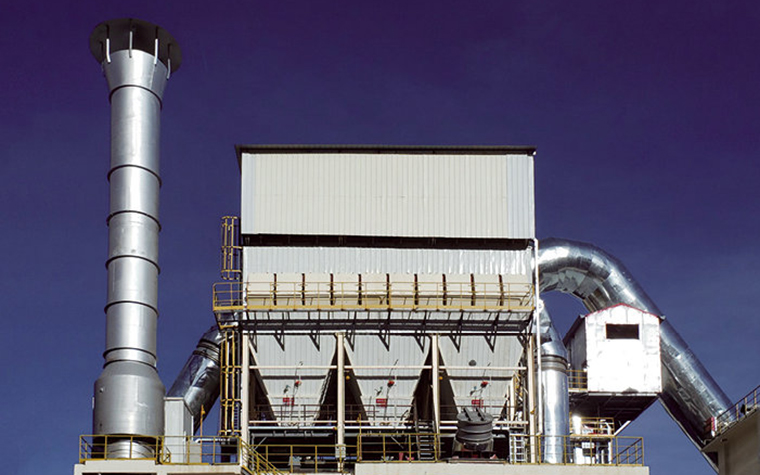
Bag filters — also known as fabric filters or baghouse filters — are among the most widely used air pollution control devices in industrial settings. They are capable of capturing fine particulate matter with high efficiency, making them essential equipment in industries such as cement, steel, power generation, chemicals, and food processing.
Over the decades, three main types of industrial bag filters have emerged, each based on a different cleaning mechanism: Shaker, Reverse Air, and Pulse-Jet. While all three serve the same fundamental purpose, they differ significantly in how they remove accumulated dust from filter bags, and consequently, in their efficiency, reliability, and suitability for modern industrial operations.
The table below summarizes the key differences between the three types at a glance:
| Feature | Shaker | Reverse Air | Pulse-Jet |
|---|---|---|---|
| Working Principle | Mechanical bag shaking to dislodge dust | Reverse airflow collapses bags to release dust | High-pressure air pulses blast dust off bags |
| Cleaning Mode | Offline only | Offline only | Online (continuous) |
| Cleaning Efficiency | Low | Medium | High |
| Energy Efficiency | Low | Medium | High |
| Equipment Footprint | Large | Large | Compact |
| Maintenance Demand | High | Medium | Low |
| Automation Level | Manual / Semi-auto | Semi-auto | Fully automated |
| Industry Trend | Declining ↓ | Declining ↓ | Growing ↑ |
Pulse-jet bag filters clean filter bags using short, high-pressure bursts of compressed air delivered through a pulse valve. Each burst creates a shock wave that flexes the bag outward, dislodging the accumulated dust cake into the hopper below. Critically, this cleaning happens online — the filter keeps running while bags are cleaned in sequence, so production is never interrupted.
Shaker and reverse air bag filters predate pulse-jet technology and were once the standard solutions for industrial dust collection. Shaker systems use motor-driven mechanical vibration to flex filter bags and dislodge the dust cake, while reverse air systems pass a controlled flow of cleaned gas back through the bags, causing them to gently collapse and releasing the accumulated dust.
Both technologies share a fundamental limitation: they require offline cleaning. The filter must be compartmentalized, and each compartment must be isolated from the airstream during the cleaning cycle. This introduces mechanical complexity, increases the overall size of the equipment, and — most critically — means the system cannot clean and filter simultaneously at full capacity. In continuous industrial operations, this results in process interruptions, higher energy consumption, and more demanding maintenance schedules.
Compared to pulse-jet systems, shaker and reverse air filters offer lower cleaning energy and less thorough dust dislodgement, leading to faster pressure drop buildup and more frequent maintenance. As global emissions regulations have tightened and industrial operations have demanded higher uptime and lower operating costs, both technologies have steadily lost ground. Today, they are primarily found in legacy installations or niche applications where their specific characteristics — such as the gentler cleaning action of reverse air for fragile filter media — offer a particular advantage. In new installations, pulse-jet has become the default choice.
Among the three types of industrial bag filters, pulse-jet technology stands out as the clear leader — offering continuous online operation, superior cleaning efficiency, and lower maintenance demands that neither shaker nor reverse air systems can match. As emission standards tighten and production uptime becomes ever more critical, the advantages of pulse-jet only grow more compelling.
Whether you are specifying a new dust collection system or planning an upgrade, pulse-jet bag filters are the most reliable, cost-effective, and future-proof choice available. Contact our engineering team to find the right solution for your application.