- Equity Code :832537

Steel manufacturing generates heavy dust, fumes, and fine particulates during sintering, ironmaking, steelmaking, and rolling. Major sources include sintering machines, blast furnaces, EAF/BOF furnaces, material handling systems, and rolling mills.
Without proper dust collection, emissions endanger worker health, damage equipment, and violate environmental regulations. Because of strict standards such as U.S. EPA NESHAP, EU IED, and China GB 28664, baghouse dust collectors are essential in modern steel plants.
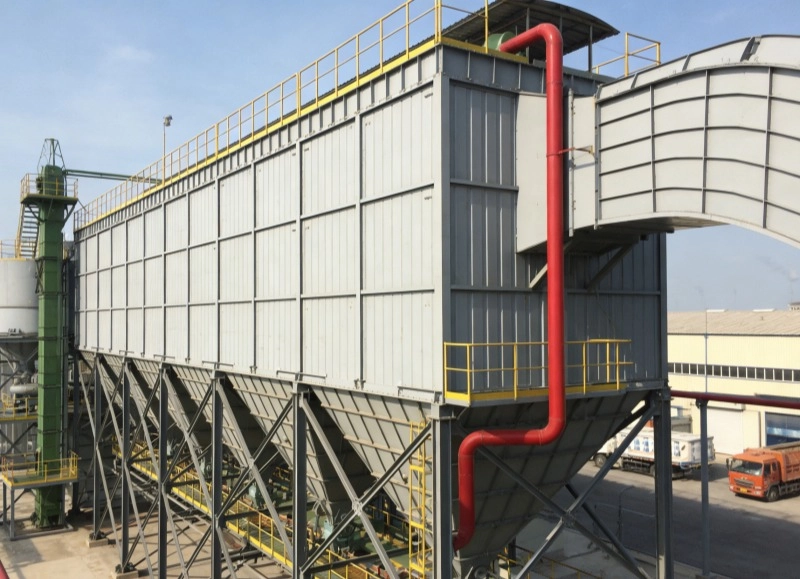
A Pulse-Jet Baghouse is the most widely used dust collector in steel plants due to its high efficiency and continuous operation capability. It works by drawing dust-laden air through filter bags, where particles are captured on the bag surface while clean air passes through. Short bursts of compressed air periodically clean the bags online, removing dust cake without stopping airflow.
This makes Pulse-Jet Baghouses ideal for demanding steel applications such as EAF, BOF, sinter plants, blast furnace dedusting, material handling, and rolling mills. Compared with reverse-air or shaker baghouses, they offer a more compact design, higher air-to-cloth ratio, lower downtime, and better suitability for large gas volumes.
Steel plant conditions require durable filter media to handle high temperatures, corrosive gases, and abrasive dust. Common options include PTFE membrane for low emissions and chemical resistance, fiberglass for high-temperature service, Nomex for medium-temperature use, and P84 for high-efficiency filtration in harsh environments.
To protect the system and extend bag life, upstream gas conditioning such as cooling, quenching, and moisture control is often required.
Baghouse dust collectors are deployed across virtually every major process area within a steel plant. The specific design requirements vary significantly depending on the gas volume, temperature, dust load, and chemical composition at each source.
EAF steelmaking generates intense bursts of fume during scrap charging, melting, and tapping. Primary and secondary extraction systems capture emissions at the source and duct them to a baghouse. EAF off-gas temperatures can exceed 200°C and contain significant metallic oxide fumes (iron, zinc, manganese), requiring high-efficiency pulse-jet baghouses with PTFE or P84 filter media and robust spark arrestors upstream.
The cast house area — where molten iron and slag are tapped from the blast furnace — generates large volumes of iron oxide dust and fumes. Canopy hoods and enclosures capture these emissions and route them to baghouse systems. Gas volumes are high but temperatures are typically moderate (80–150°C), making fiberglass or Nomex filter bags a cost-effective choice.
BOF steelmaking produces both primary off-gas (handled by wet scrubbers or dry electrostatic precipitators) and secondary fugitive emissions during charging and tapping. Baghouse dust collectors are widely used for secondary dedusting, capturing the brownish-red iron fume that escapes the primary hood.
Sinter strand off-gas is characterized by high temperatures, dust loads, and complex chemistry including SO₂, dioxins, and heavy metals. Modern sinter plants increasingly use large-scale pulse-jet baghouses with activated carbon injection for simultaneous dust and pollutant removal, achieving sub-10 mg/Nm³ particulate emissions.
Transfer points, conveyor belts, stockyards, and storage silos generate diffuse, low-temperature dust from iron ore, coke, coal, and limestone. Smaller baghouse units or bin vents are deployed at each emission point, providing localized dust suppression that protects both worker health and material quality.
Even the most well-designed baghouse dust collector will underperform without a disciplined maintenance program. In the demanding environment of a steel plant, proactive maintenance is essential to achieve regulatory compliance, extend equipment life, and control total cost of ownership.
Advanced control systems can significantly improve baghouse performance. Variable frequency drives (VFDs) on ID fans allow airflow to be dynamically adjusted based on production load, reducing energy consumption by 20–40% compared to fixed-speed operation. Adaptive cleaning controllers that trigger pulse cycles based on real-time ΔP rather than fixed time intervals extend bag life and reduce compressed air usage.
Online continuous emissions monitoring systems (CEMS) for particulate matter, SO₂, and NOₓ allow operators to detect performance degradation early and demonstrate regulatory compliance in real time. Integration with plant SCADA or DCS systems enables centralized monitoring and alarm management.
Investing in a high-performance baghouse dust collection system delivers measurable returns across multiple dimensions:
Looking ahead, predictive maintenance technologies — including IoT-based sensor networks, machine learning algorithms for bag failure prediction, and digital twin modeling of baghouse performance — are transforming how steel producers manage their dust collection assets. These innovations reduce unplanned downtime, optimize replacement cycles, and support the steel industry's broader push toward smarter, more sustainable operations.
Baghouse dust collectors are indispensable to safe, compliant, and efficient steel plant operations. From EAF fume extraction to sinter plant off-gas treatment, the right baghouse system — properly selected, integrated, and maintained — delivers lasting value across environmental, operational, and financial dimensions. As emission standards tighten and sustainability demands grow, investing in advanced baghouse technology and intelligent monitoring is not just a regulatory necessity but a strategic imperative for steel producers worldwide.